LiamCloete.
I design objects and then make them. Third-year industrial design at Open Window, Stellenbosch. I sketch it, model it in SolidWorks, then cut, bend, print or code it.
Seven projects, seven materials
 01
Patinated copper
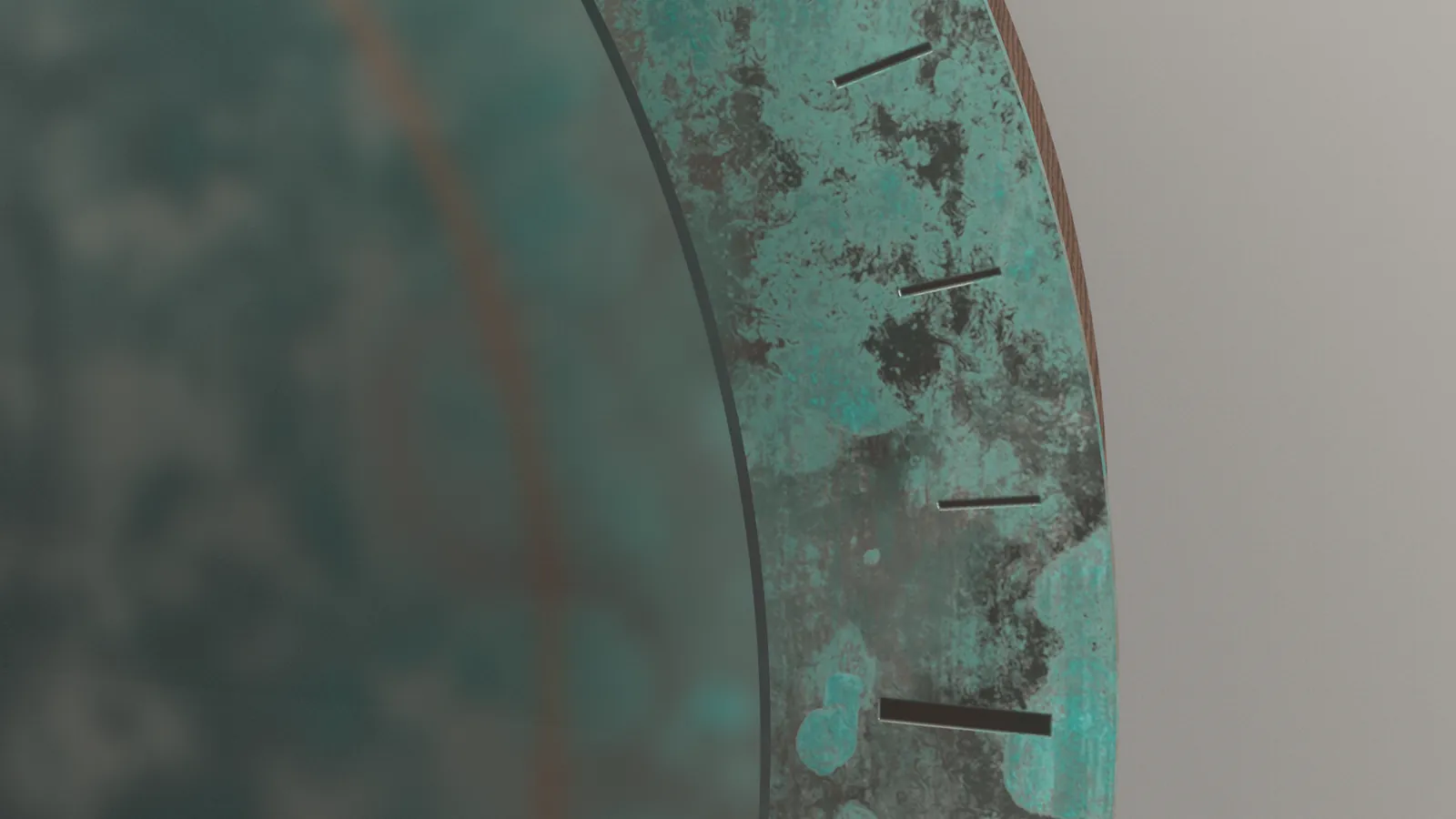
Where TomorrowOne-hand heirloom wall clock
01
Patinated copper
Where TomorrowOne-hand heirloom wall clock
 02
Surgical stainless
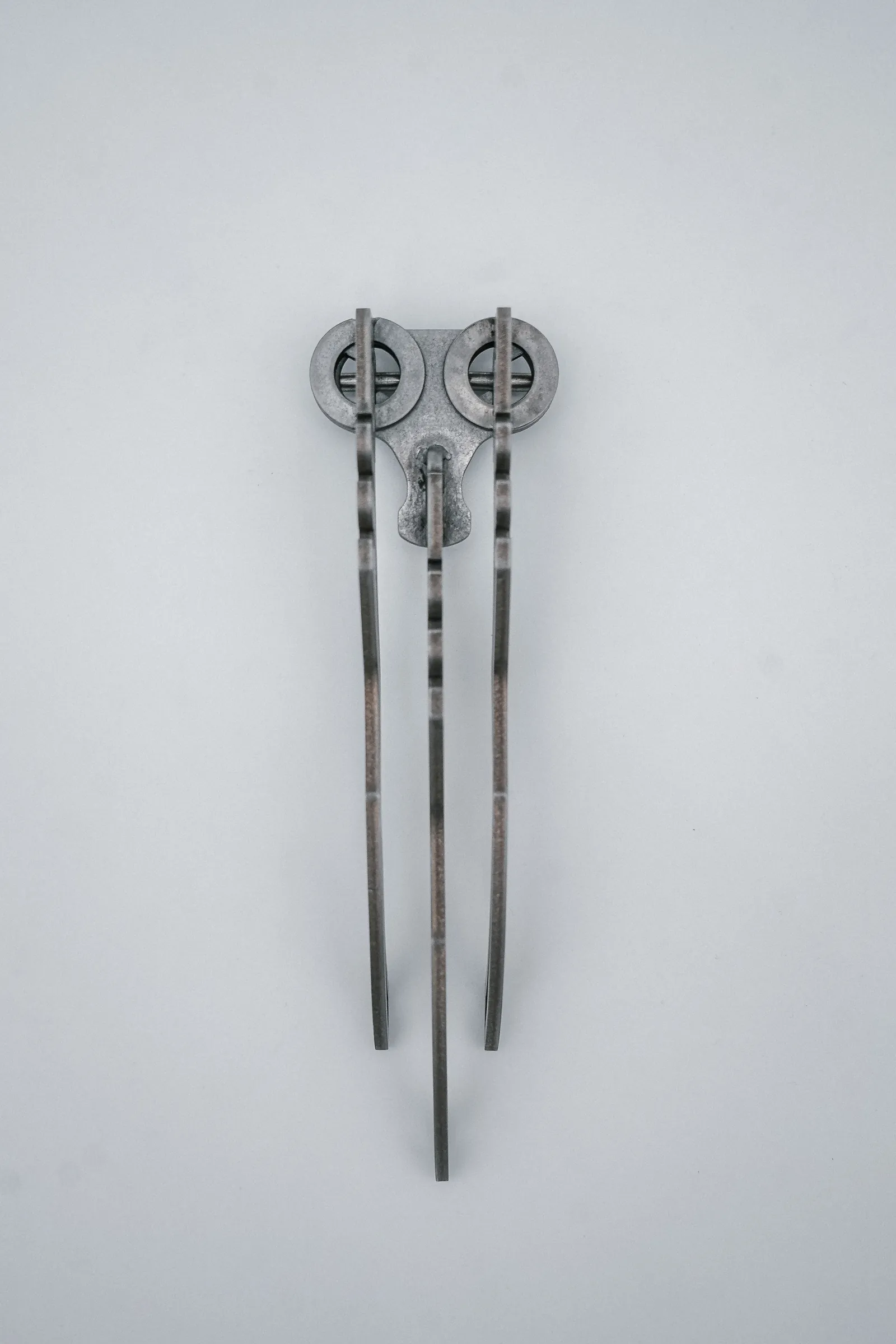
Argo MultistandCanister stand for Dead Reckon
02
Surgical stainless
Argo MultistandCanister stand for Dead Reckon
 03
PMMA acrylic
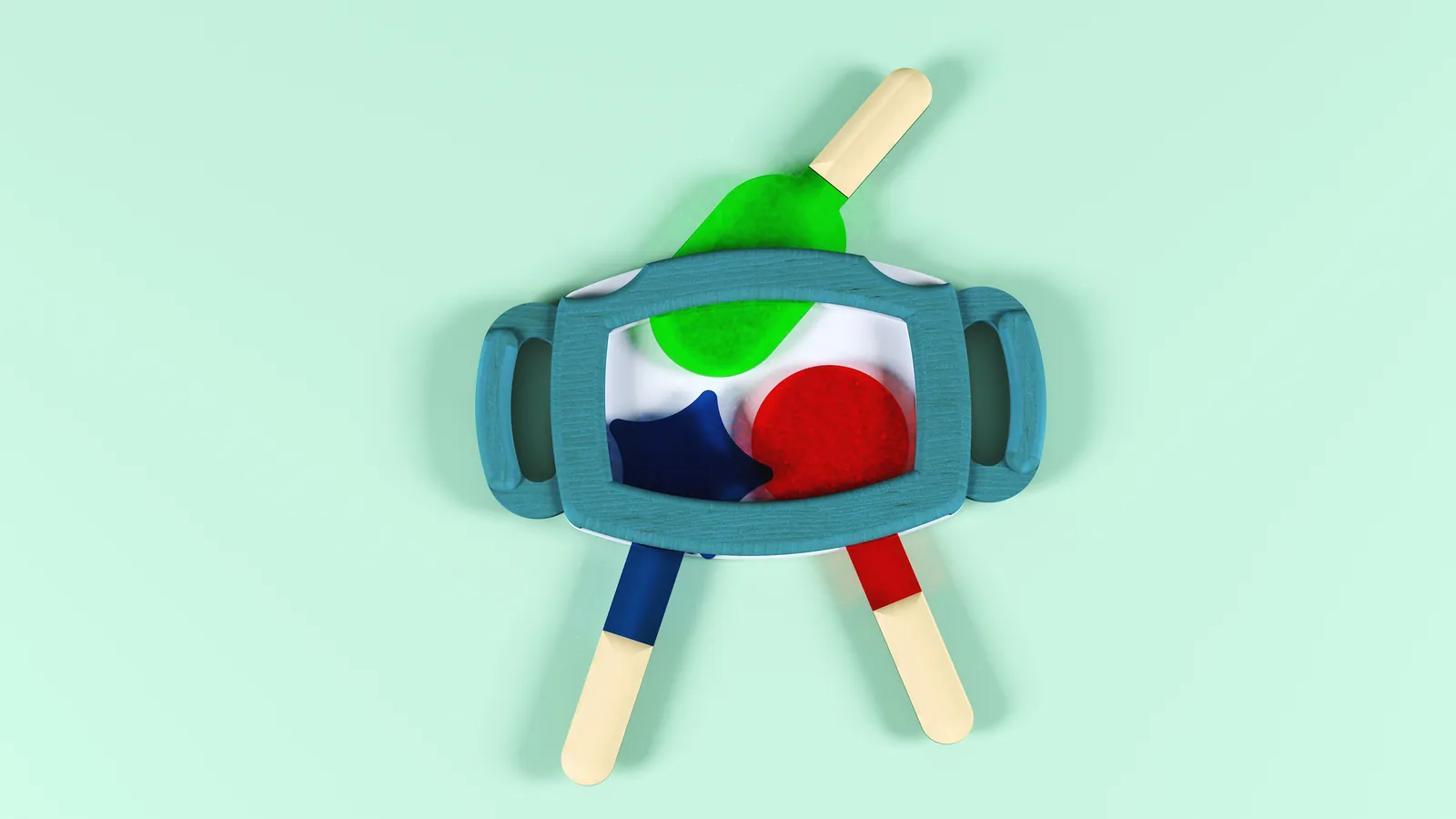
Colour CreatureSTEM toy for ages 3–6
03
PMMA acrylic
Colour CreatureSTEM toy for ages 3–6
 04
Bioreceptive concrete
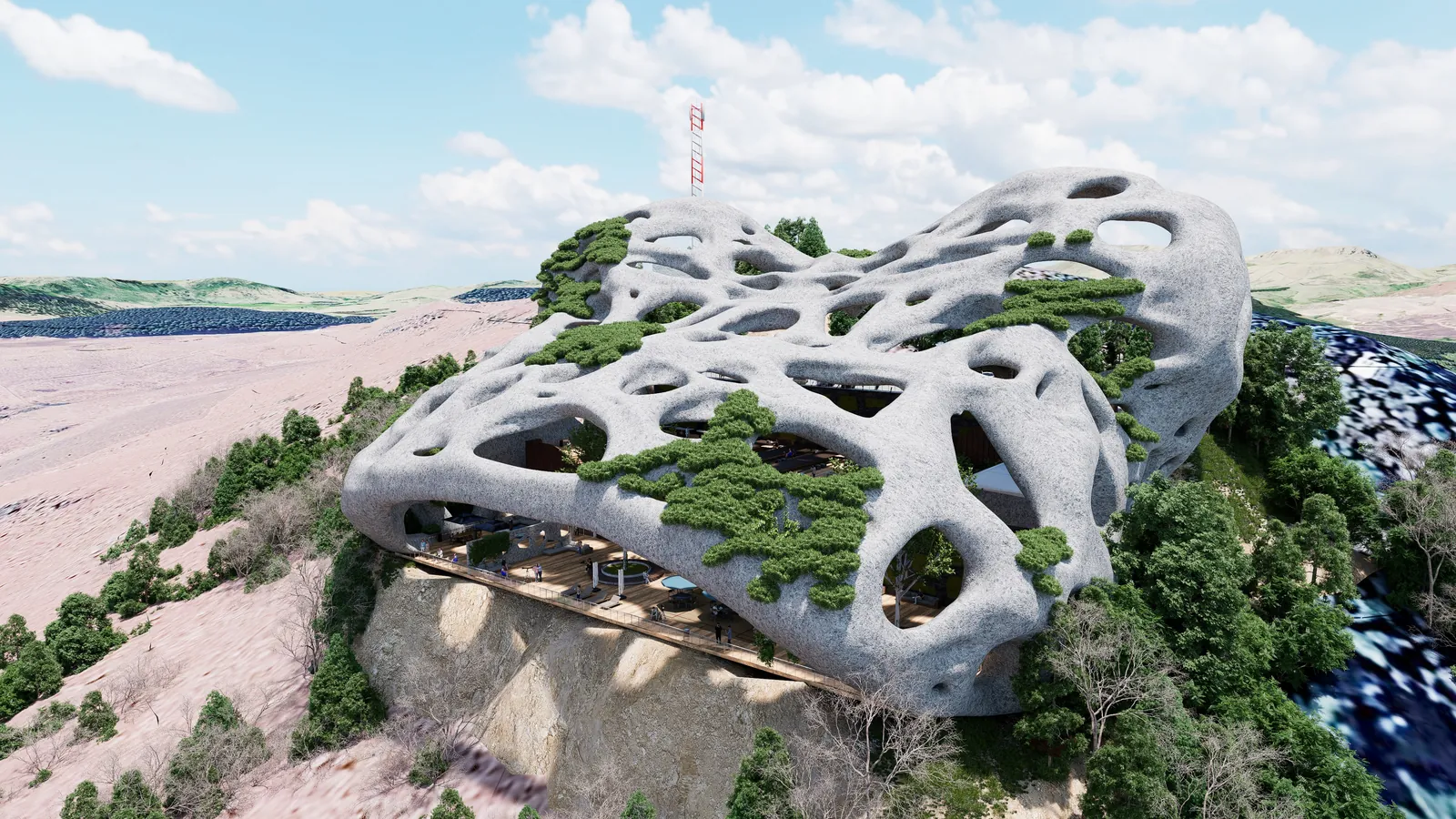
TornicaPavilion that weathers into the forest
04
Bioreceptive concrete
TornicaPavilion that weathers into the forest
 05
Baltic birch ply
Flatpack Vinyl HolderTool-free record furniture
05
Baltic birch ply
Flatpack Vinyl HolderTool-free record furniture
 06
LLDPE
SphericonRollerRotomoulded play equipment, ages 3–5
06
LLDPE
SphericonRollerRotomoulded play equipment, ages 3–5
 07
2 mm mild steel
GardenTowerHanging garden for small rooms
07
2 mm mild steel
GardenTowerHanging garden for small rooms
Selected work
2025–2026, newest first. Photos where it's built, renders where it's still on the drawing board.
 Render
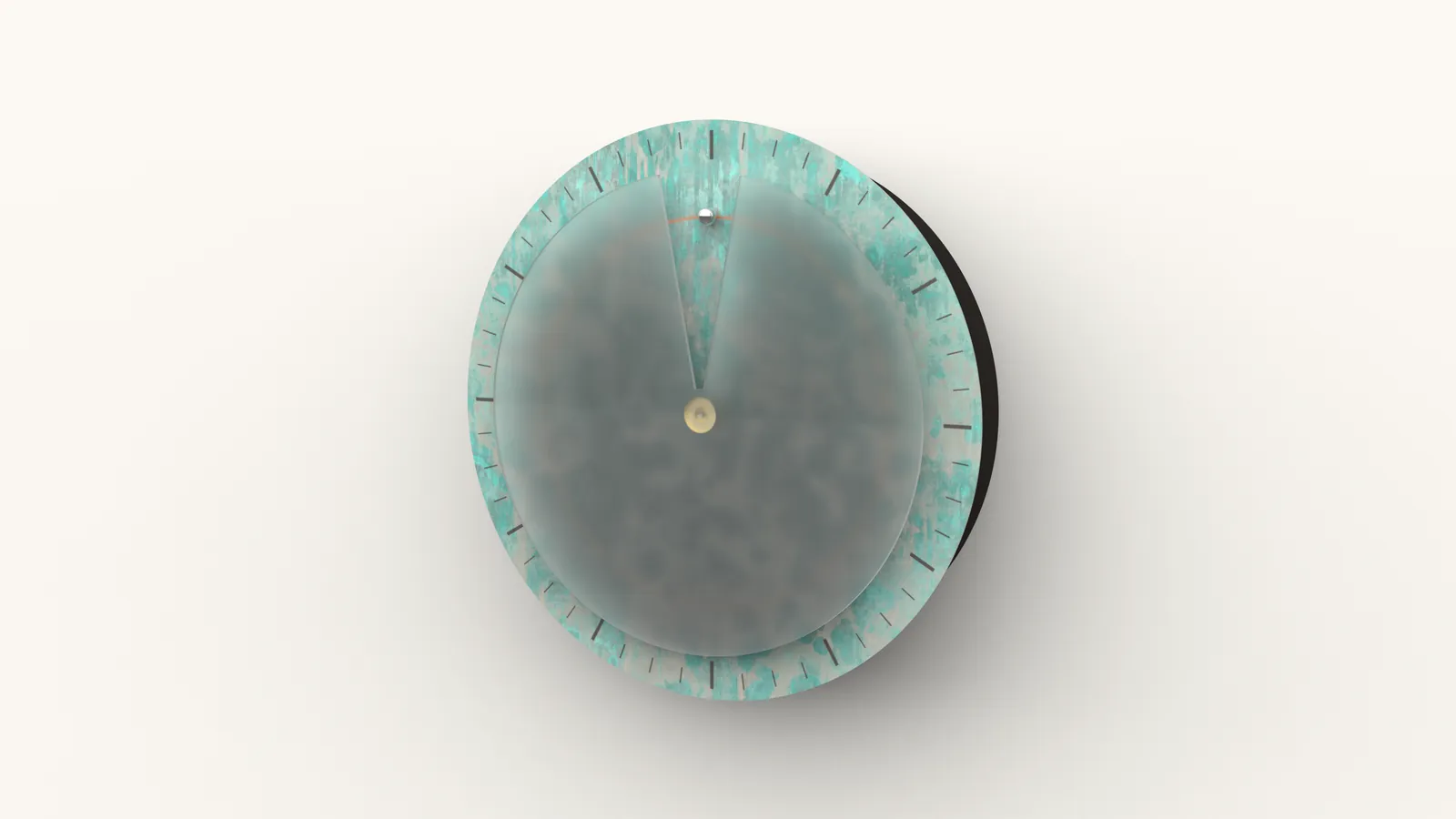
Where Tomorrow
A hand you can't see moves a hand you can. A magnet behind a copper face drags one steel ball round the hour; a frosted veil shows only the present.
 Photo
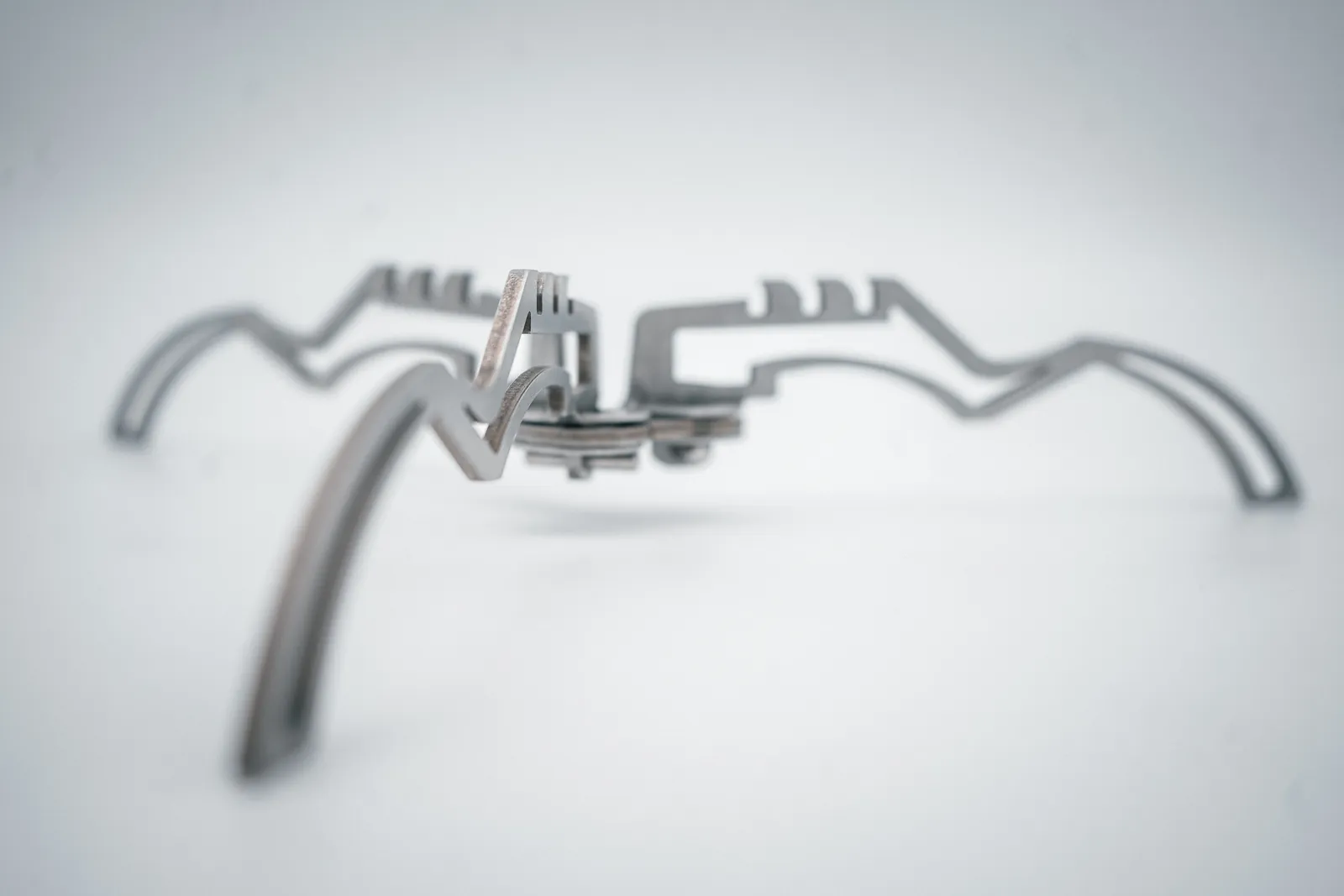
PhotoArgo Multistand
A flat-packing stand that clips under a gas canister so a hiker's stove stays upright on rough ground. Laser-cut stainless, no coating.
 Render
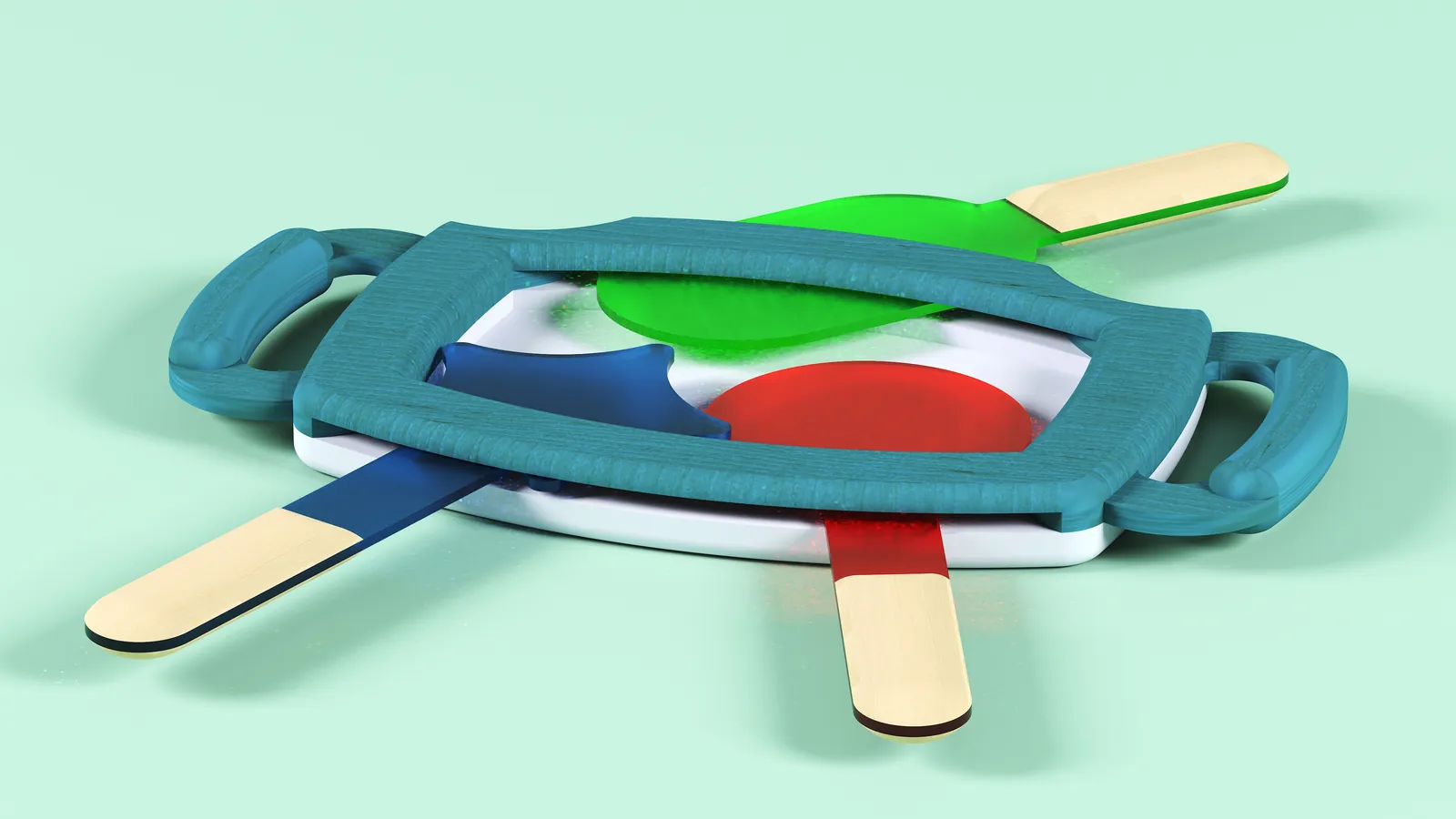
Colour Creature
Children slide cyan, magenta and yellow acrylic paddles over a drawing and watch hidden pictures appear and disappear. Subtractive colour, learnt by hand.
RenderTornica
A terraced pavilion on Tor Doone above Hogsback, under a porous concrete shell designed for moss and lichen to grow on.
 Photo
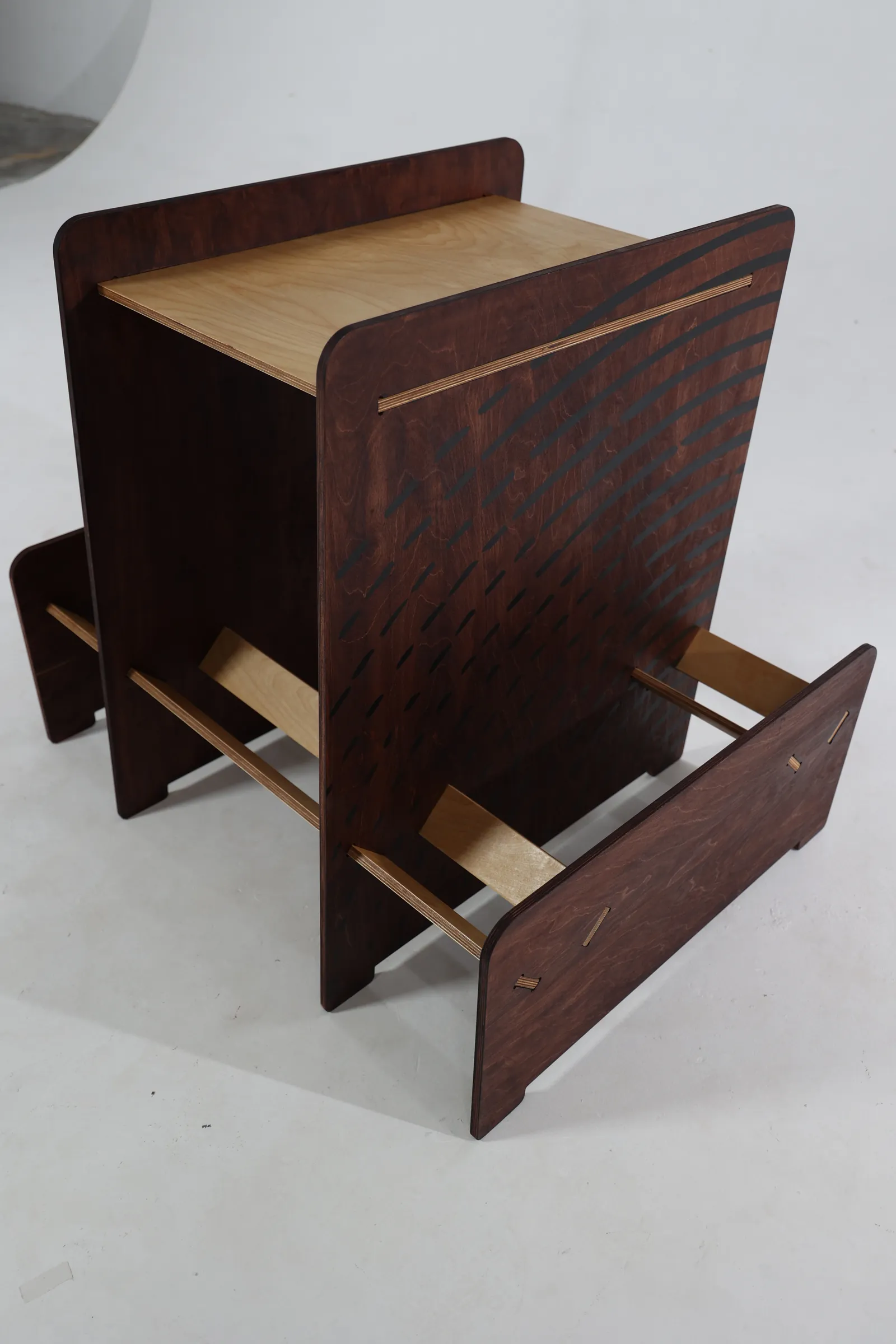
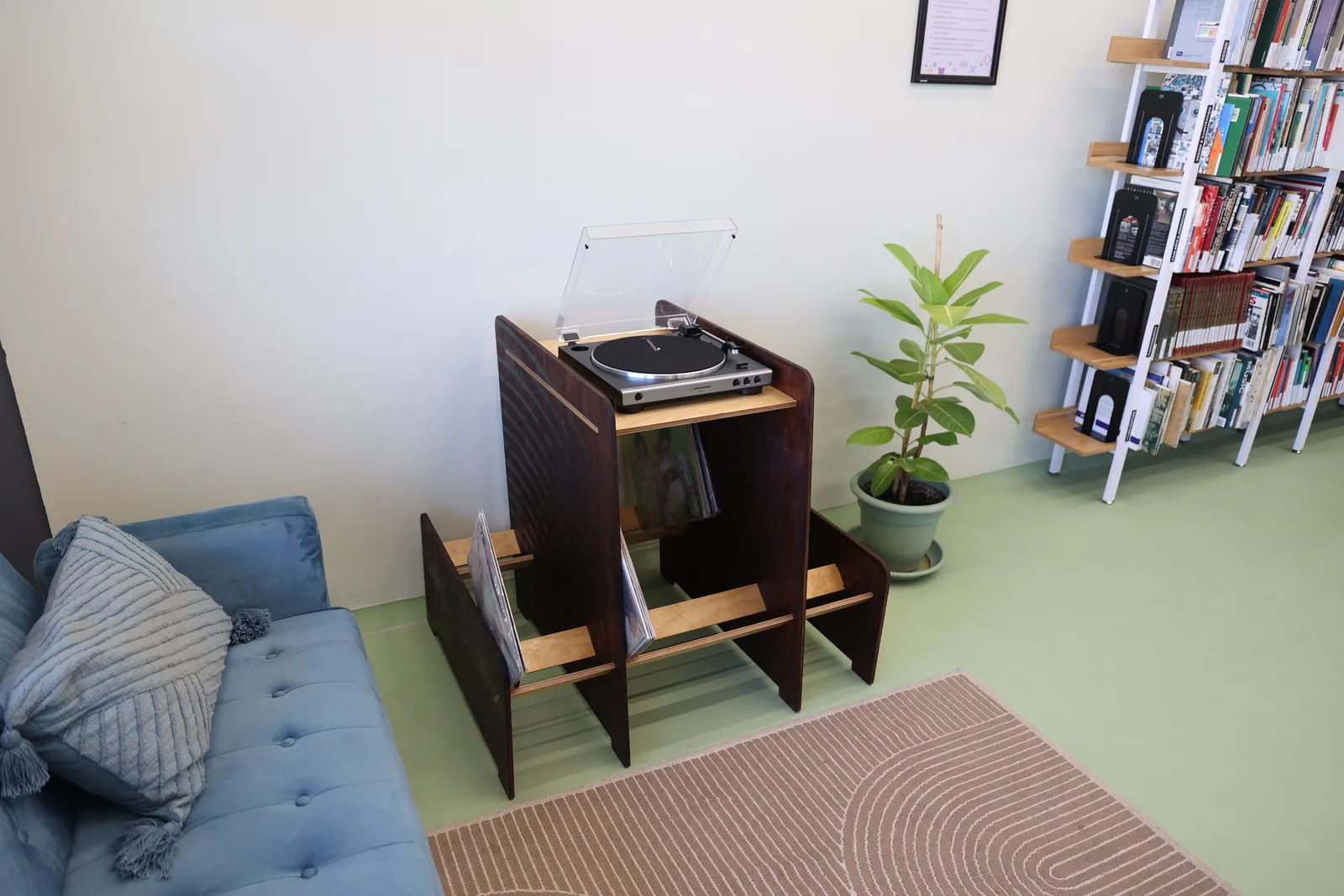
PhotoFlatpack Vinyl Holder
A CNC-routed unit for records, turntable and amplifier that assembles by friction fit alone: no glue, no fasteners.
 Render
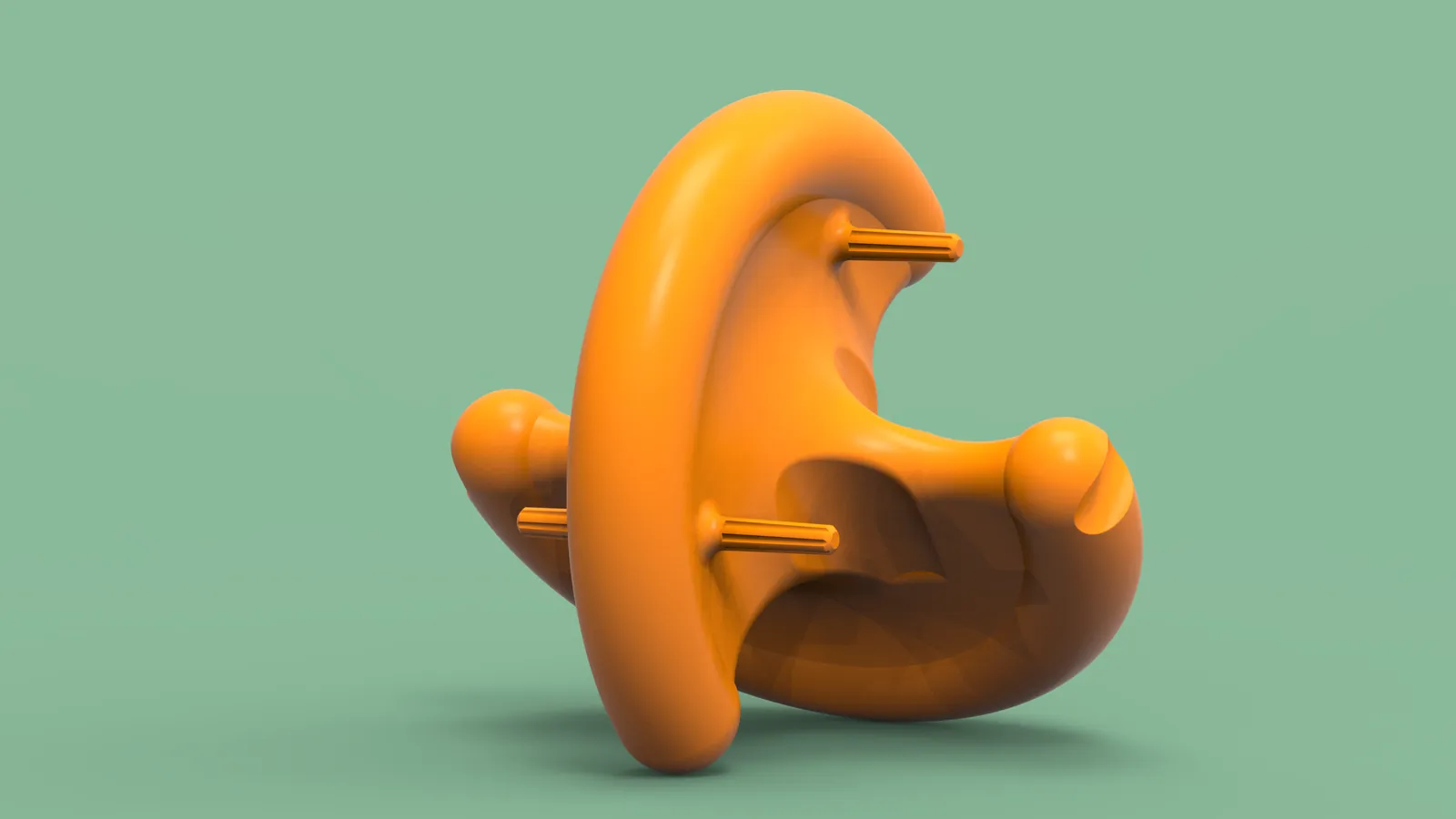
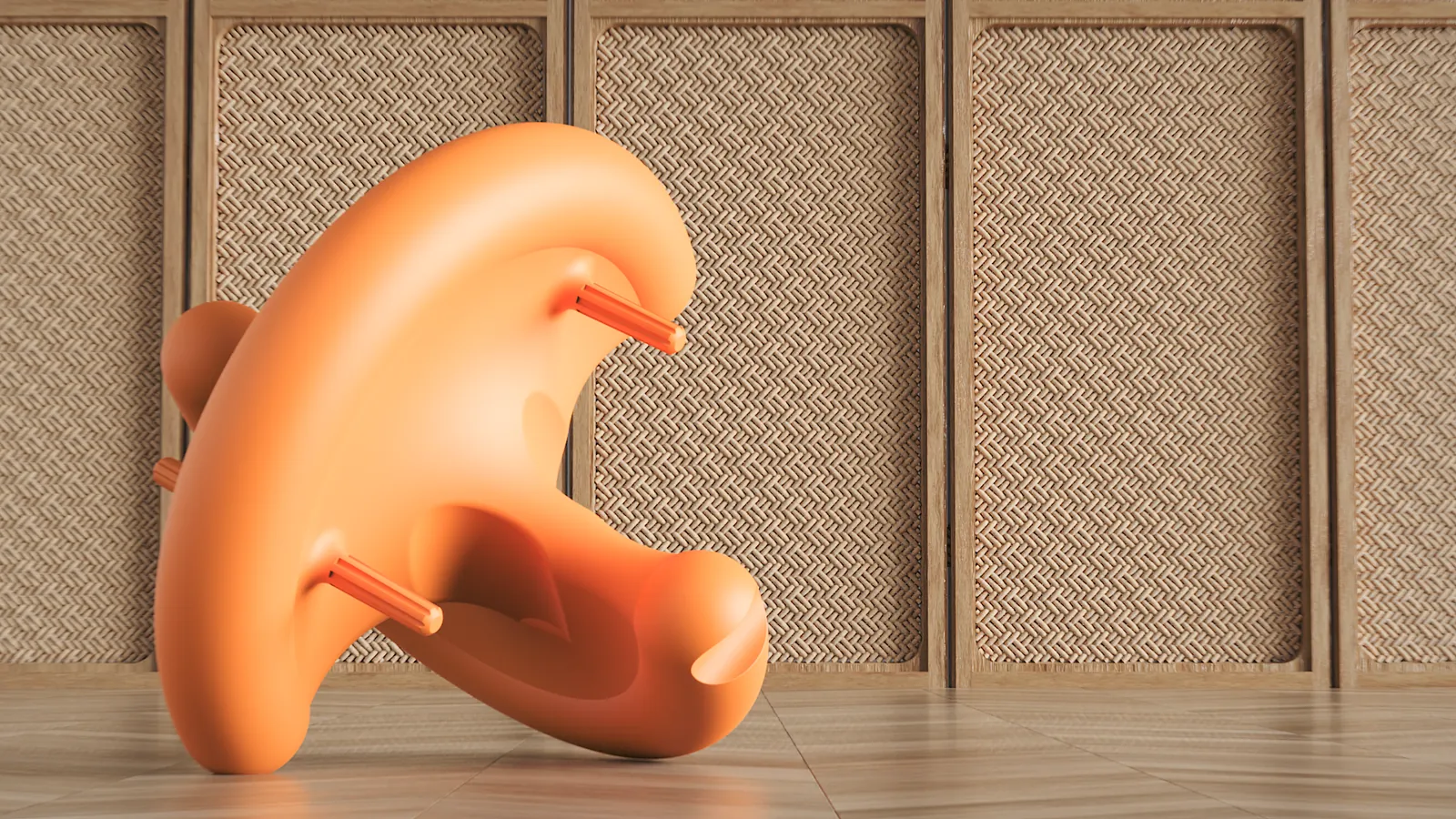
SphericonRoller
A rotomoulded LLDPE sphericon that turns a straight push into a wobbling, multi-axis roll, for balance and gross-motor play.
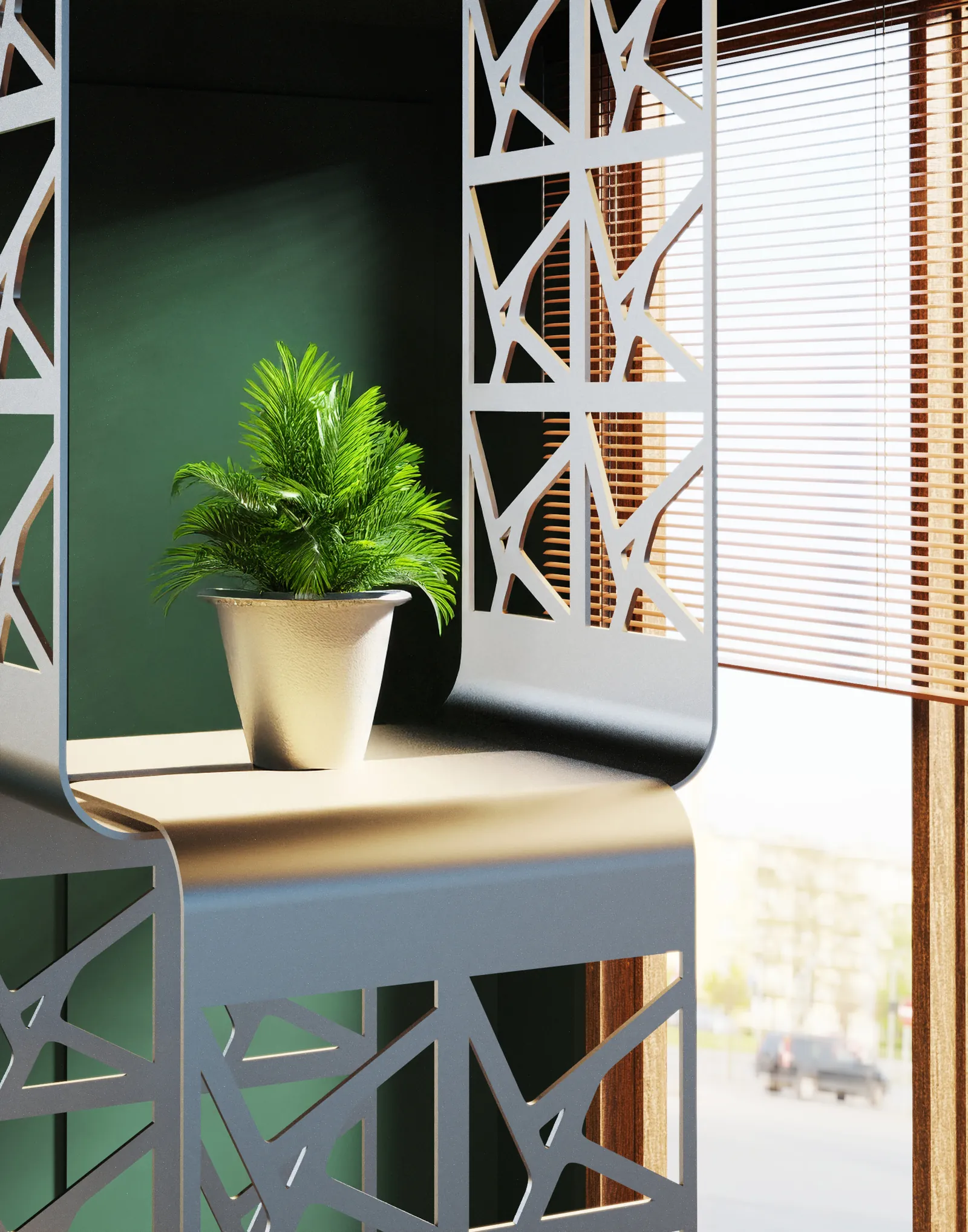 Render
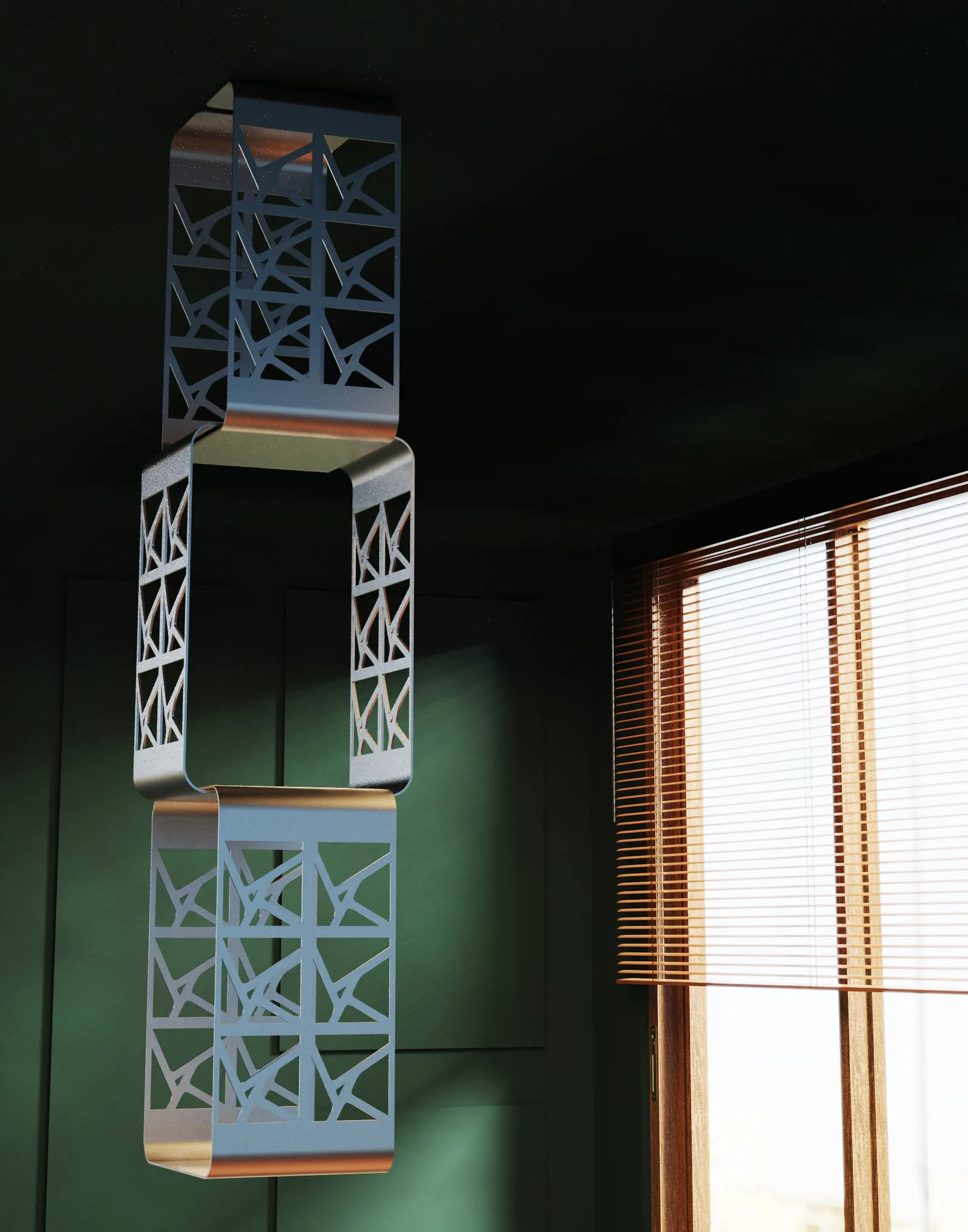
GardenTower
Stacking sheet-steel modules that hang from the ceiling and grow plants in the space student rooms never use.
Also built
Electronics, props and pitches from creative computing and studio briefs.
-
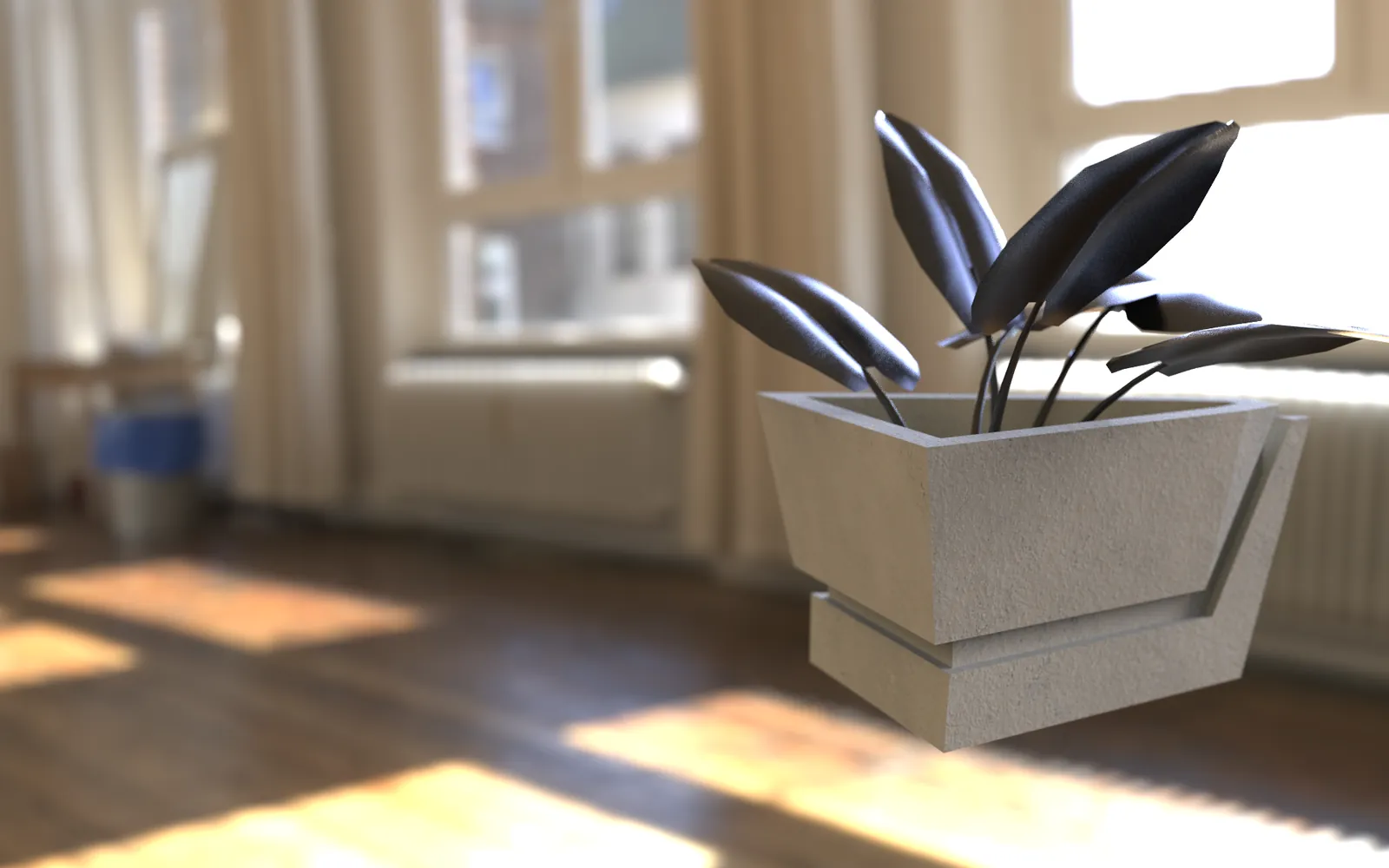 Render
Béton Concrete desk planter
1.4 kg of cast concrete so the pot never wobbles, with a surface meant to grow moss. Single-mould casting at about R30 a unit, retail R300.
-
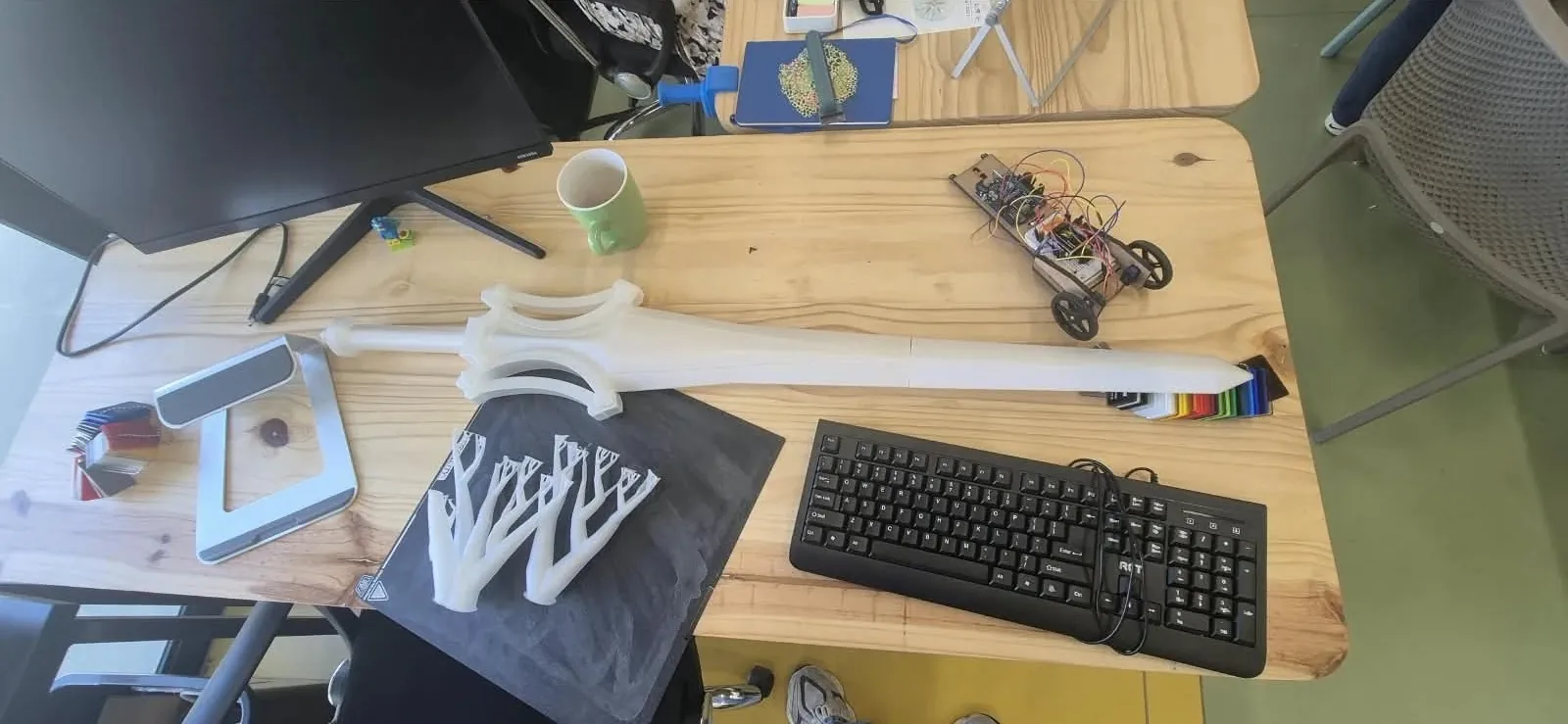 Photo
PhotoSword of Power Smart film prop
Team build: an ESP32 sword and crystal that talk over ESP-NOW, with motion-triggered light and haptics. Print based on 3dworkbench's model (CC BY 4.0).
-
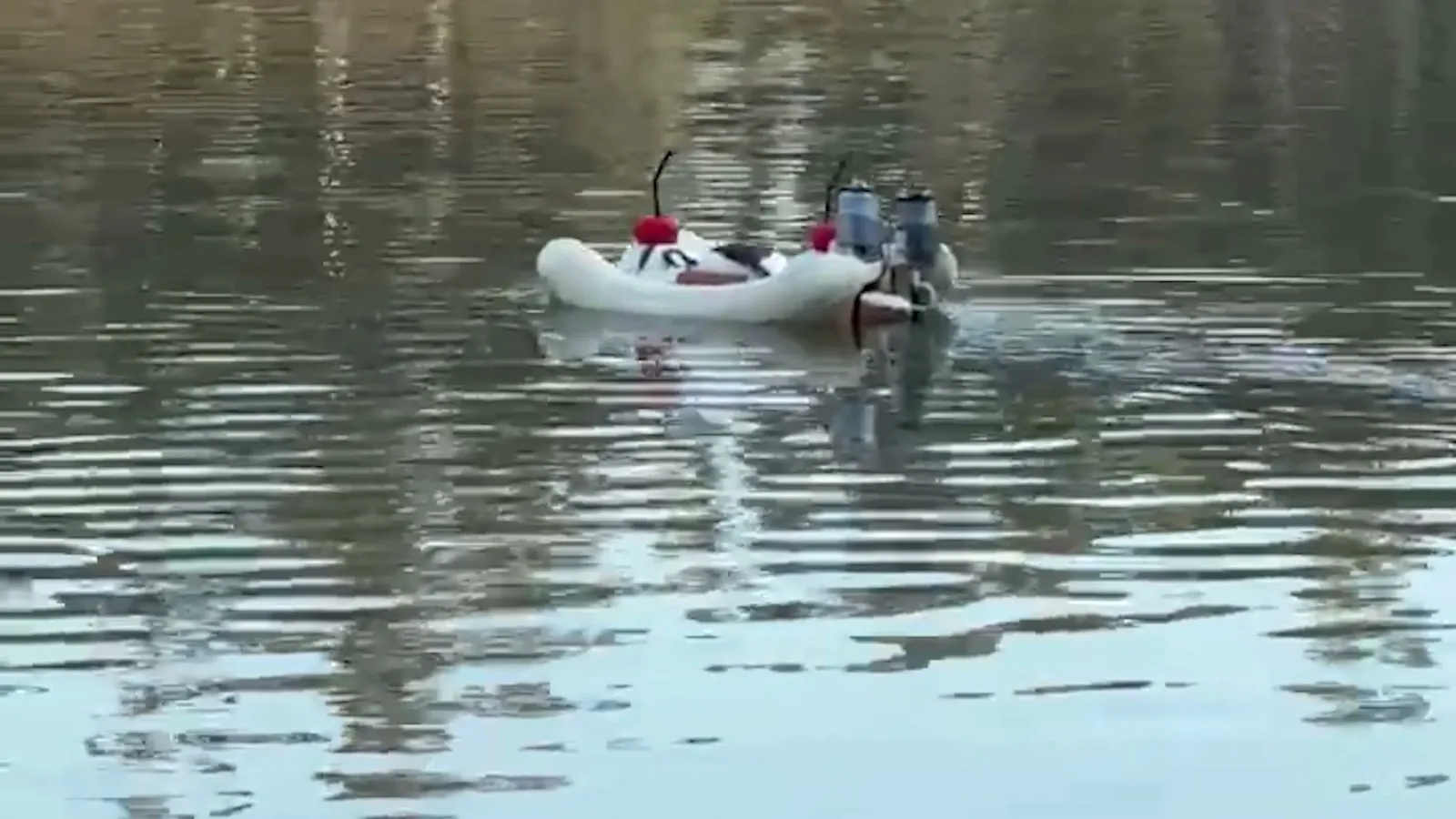 Video still
Lidenana Radio-controlled boat
Paired transmitter and receiver boards, GB37-520 12 V motors, tested in a pool and then on open water.
-
Turn-signal helmet Wearable safety light
MPU6050 motion sensing drives WS2812 LEDs so a cyclist's helmet indicates left and right.
-
Boiler Boom Board game with a physical GM rig
2v1 steampunk tile game. An Arduino controller (mist, LED ring, rumble motor) reacts to in-game events. Card economy checked by Monte Carlo simulation.
About
I'm a third-year industrial design student at Open Window, based between Cape Town and Stellenbosch. The course is half product design and half creative computing, so most of what I make has a mechanism, a circuit or both.
I like projects that force a decision: a material specced, a tolerance held, a circuit that either works or doesn't. Outside the studio I run a one-person print shop for other students, review films (600+ on Letterboxd) and listen to far too much music.
Experience
Prototype fabrication consultant
Freelance · Open Window
Fabricating 3D-printed prototypes for 2nd and 3rd-year design students: print settings, materials, tolerances and fixing SolidWorks and Fusion models so they print first time.
Campus Pulse coordinator
Student Council · Open Window
Running campus surveys and turning the results into reports and infographics for council planning.
Media team coordinator
Brand Stellies
Producing visual material for brand interviews and activations.
Education
BA Industrial Design
Open Window Institute, Stellenbosch
Higher Certificate in Design Thinking, with distinction
Greenside Design Center
National Senior Certificate
Selborne College
CAD & visual
- SolidWorks (advanced)
- Fusion 360
- Revit + Dynamo
- KeyShot · D5 · Visualize
- Engineering drawings
- Photoshop · Illustrator
Making
- FDM printing (expert)
- CNC routing
- Laser cutting
- Sheet metal: cut, bend, weld
- Wood & MDF workshop
- Moulding & casting
Electronics
- C++ / Arduino · ESP32
- Sensors (IMU, FSR, RTC)
- WS2812 LED systems
- Steppers & drivers
- ESP-NOW links
- Circuit debugging