01 · Patinated copper
Where Tomorrow.
One-hand heirloom wall clock
 Render
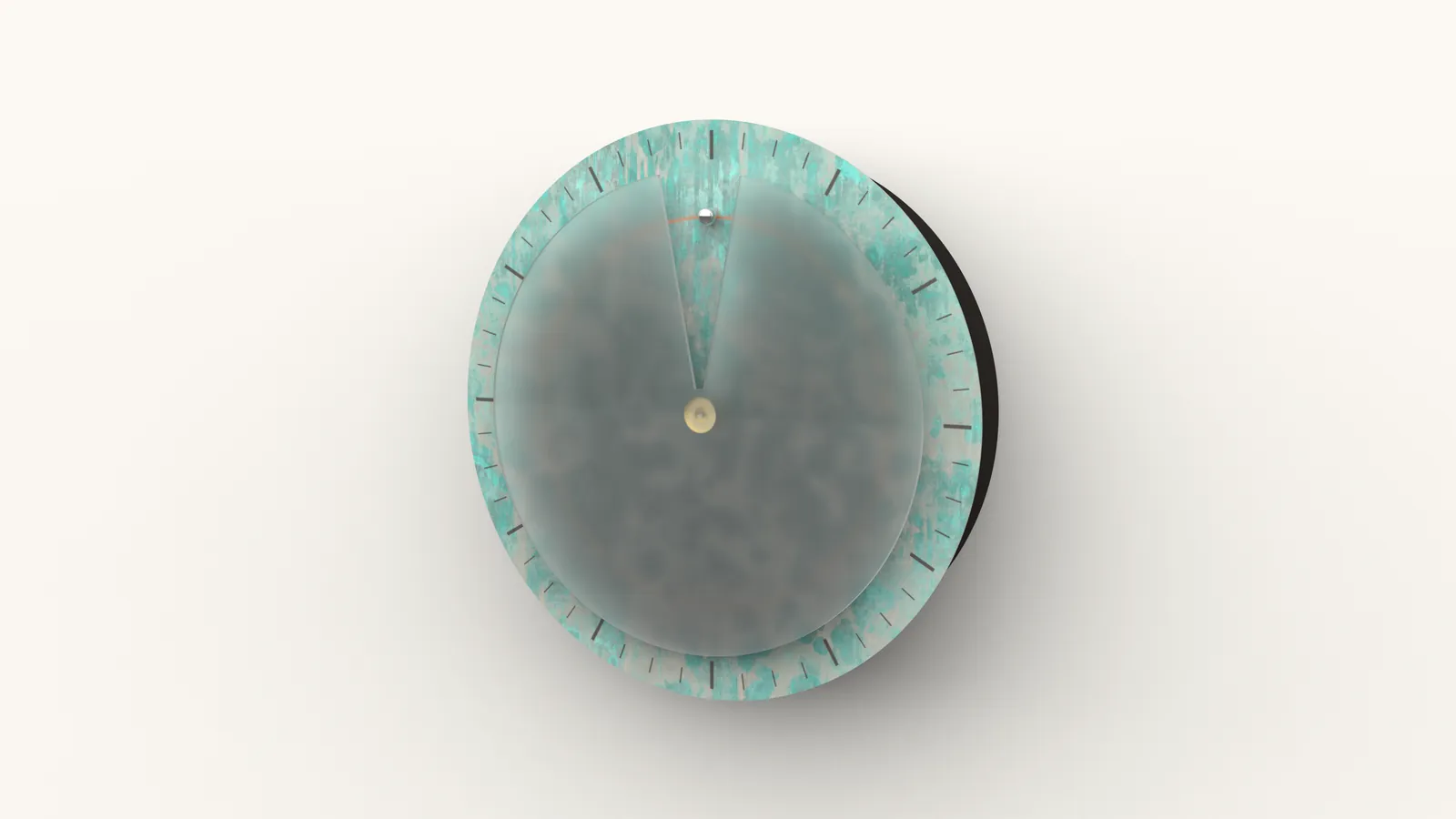
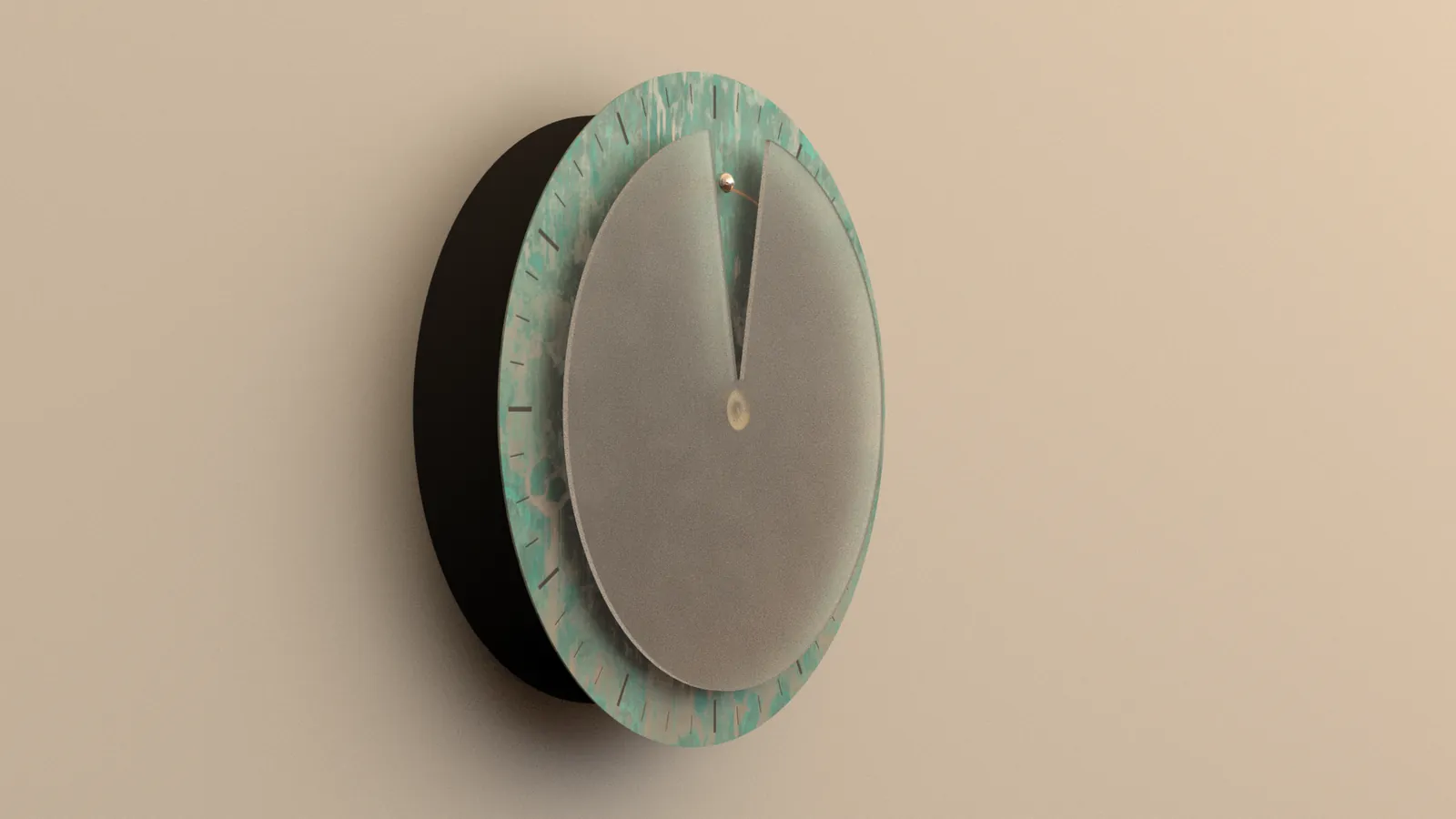
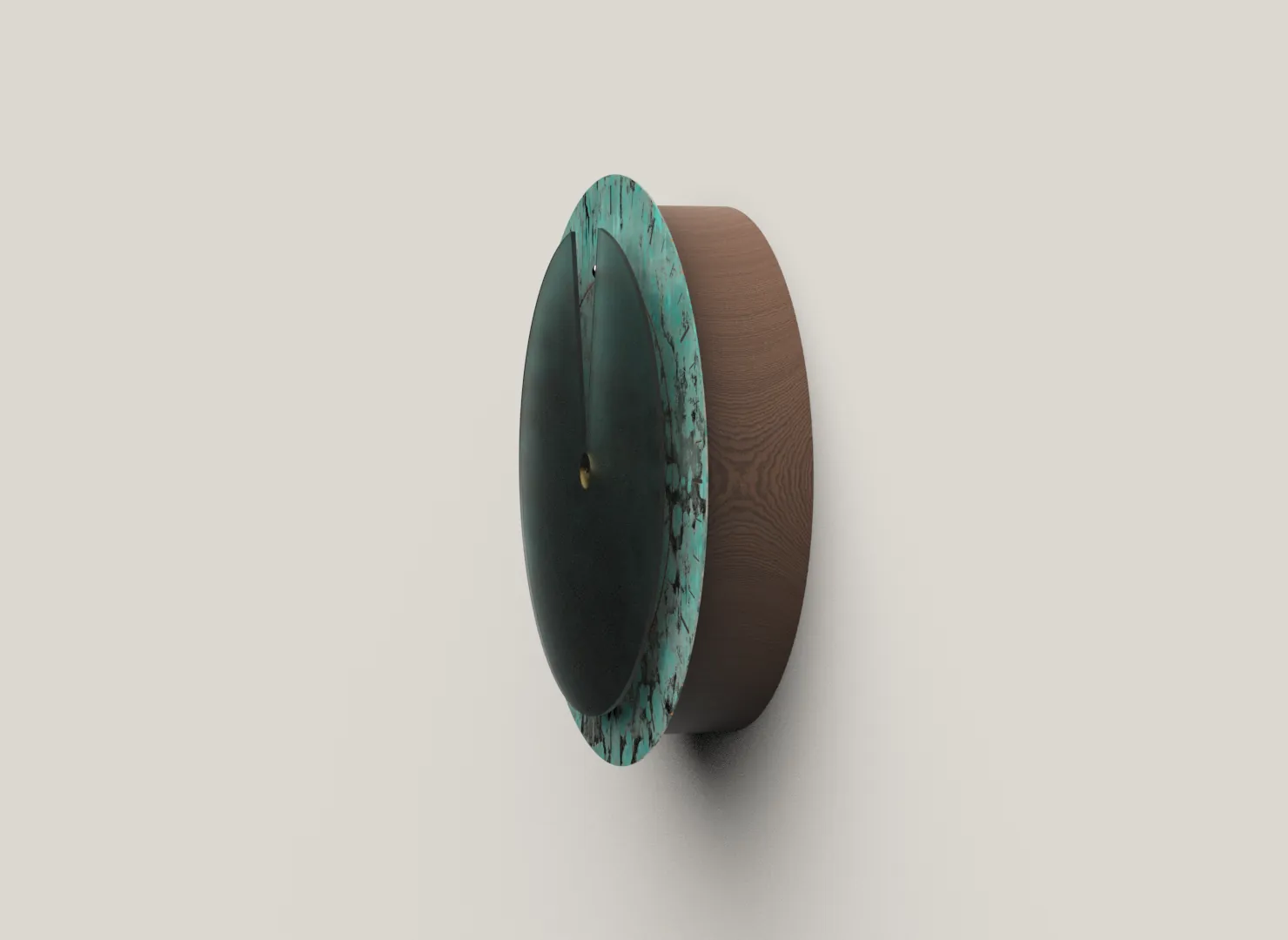
A hand you can't see moves a hand you can. A magnet behind a copper face drags one steel ball round the hour; a frosted veil shows only the present.
Brief
Design a piece of heirloom furniture: something built to be repaired, kept and passed on, and that tells a story about where you come from.
Idea
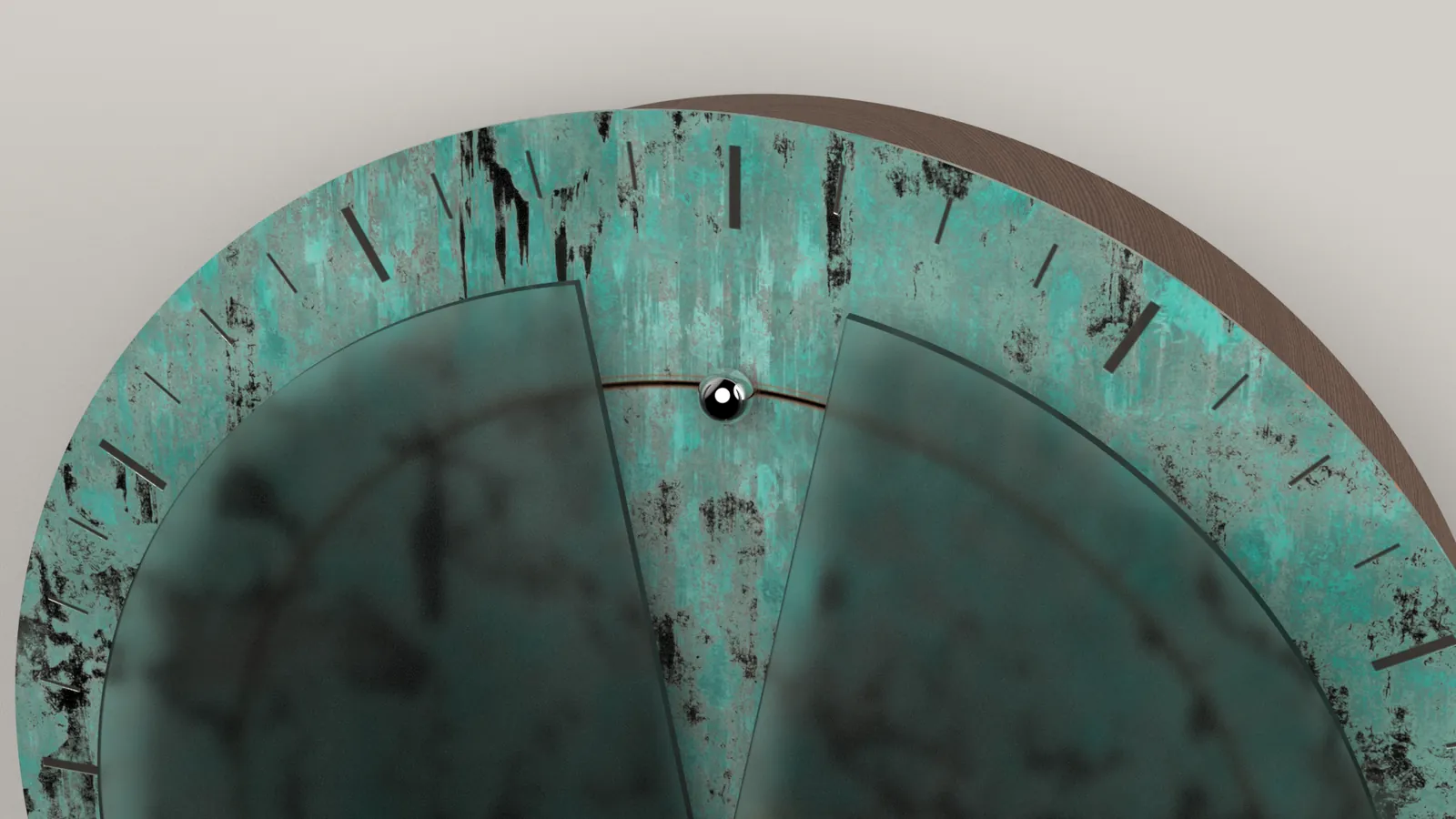
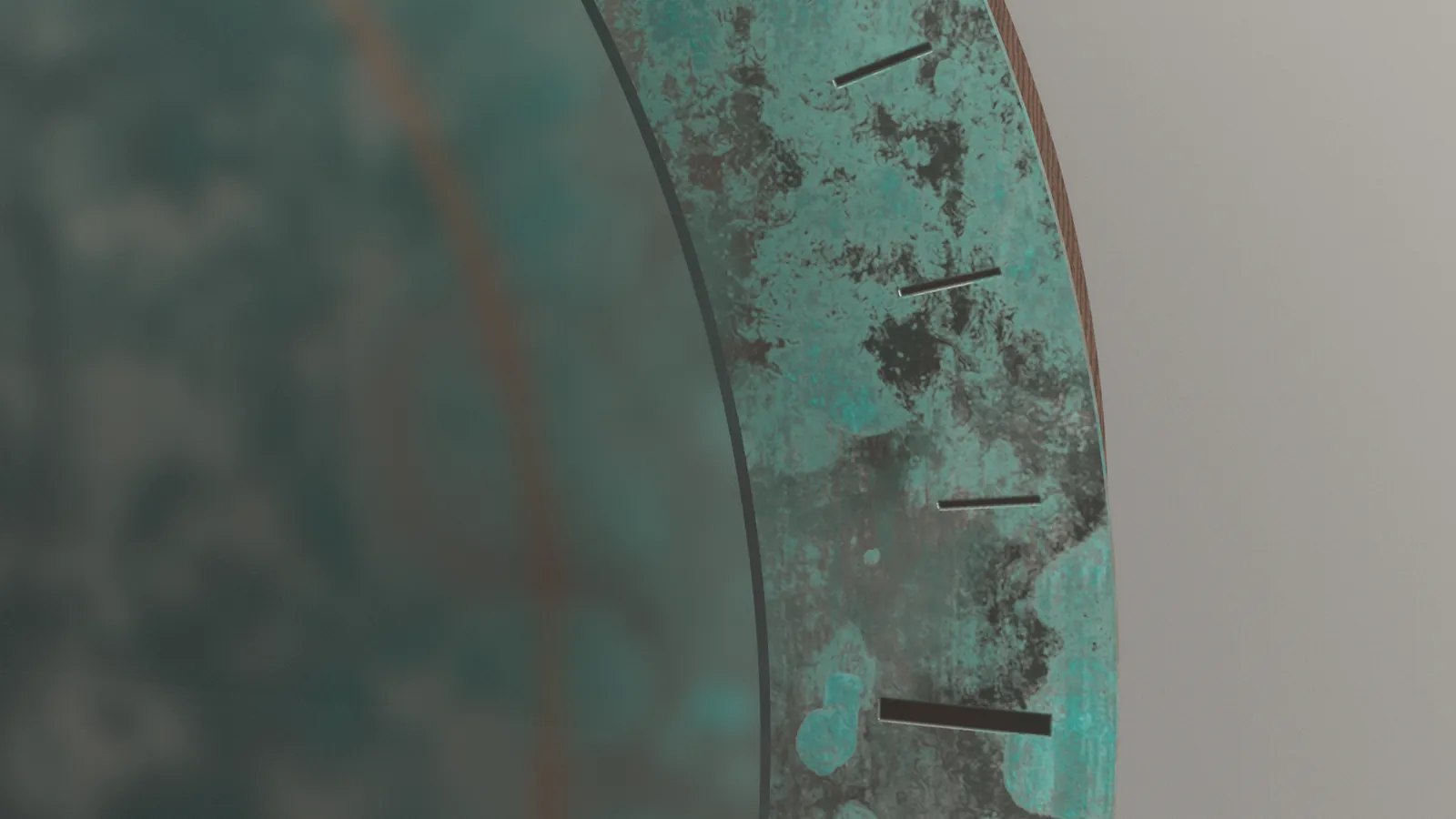
My family motto is Ubi cras, “where is tomorrow?”, used since 1826. Our name has been spelt four ways, and kloot means a ball, so in this clock the ball is the family's path: it wanders, but it always arrives. A frosted glass veil with a clear 22° wedge turns with it, so only the present hour is sharp, and over the years the ball polishes its own path into the patina.
Research
I surveyed 19 people: 68% keep objects because they tell a story, 63% say wear makes things more special, more than half chose copper with dark wood, and 84% would repair rather than replace.
Engineering
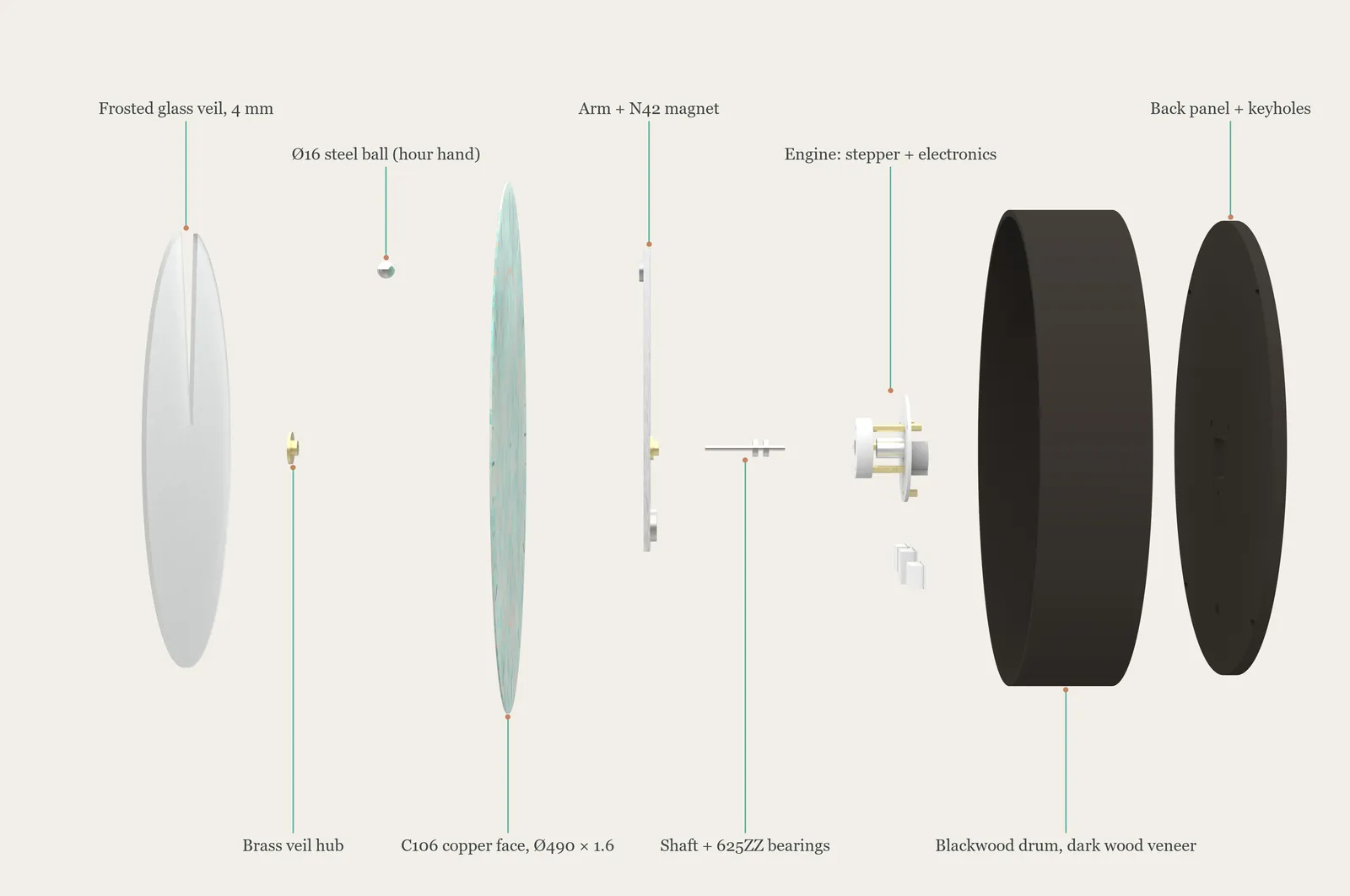
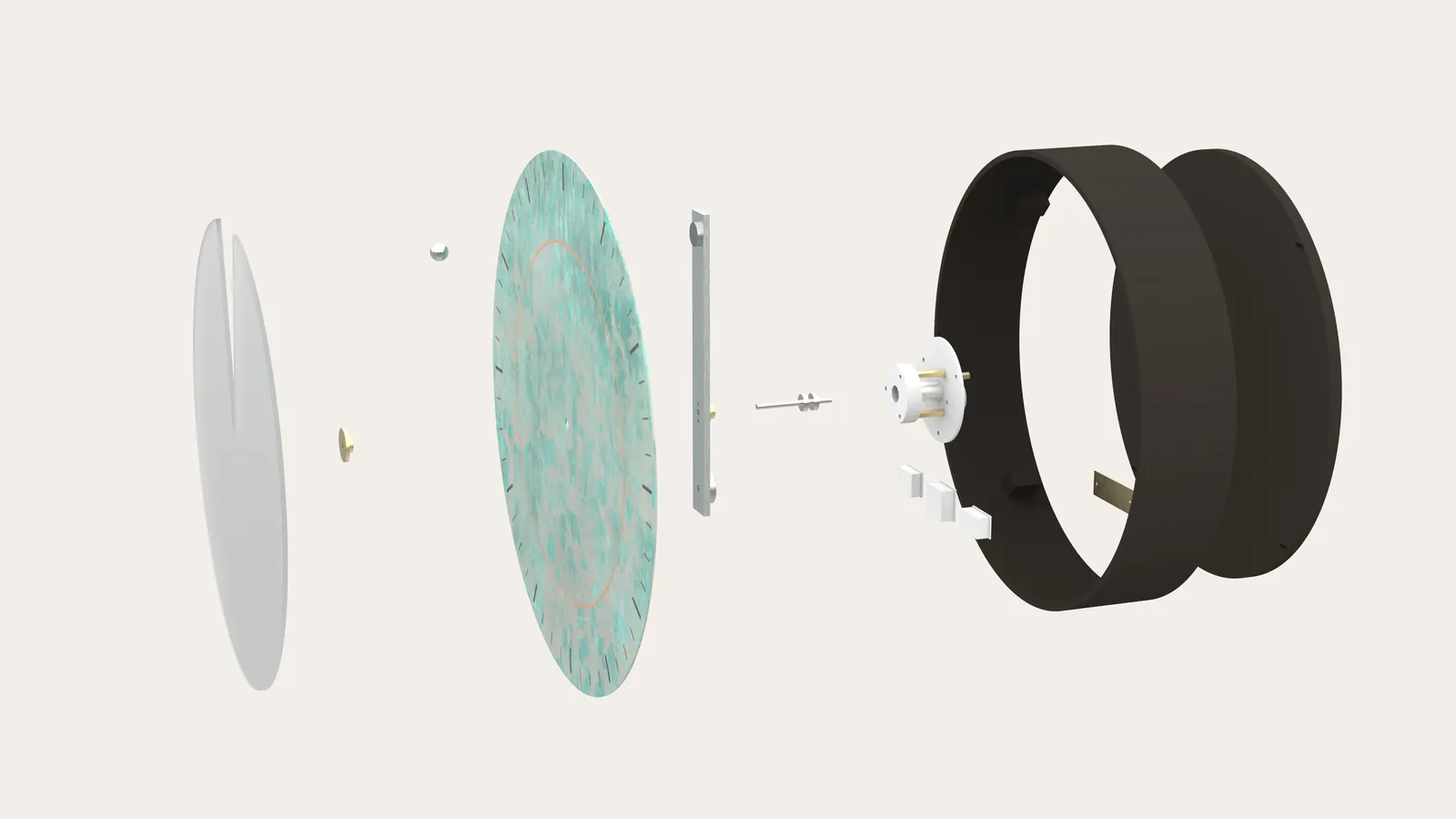
Behind the 1.6 mm copper face, a stepper and a DS3231 clock chip turn an arm carrying a magnet; copper isn't magnetic, so the pull passes straight through to the ball. A quartz movement failed its stall test, which is why it's a stepper. The numbers were checked in SolidWorks and by hand: 5.5 N of magnet pull (34 times the ball's weight), a 2.1 times torque margin, zero clashes in a full turn, and a safety factor of 10 on the keyholes.
Making
The drum is bent-laminated: four 1.5 mm Blackwood strips glued round a laser-cut former, strapped for 24 hours, trimmed to 94.5 mm and finished in dark wood veneer. Blackwood is invasive in South Africa, so using it removes it. Everything you would ever service screws apart.
Where it is now
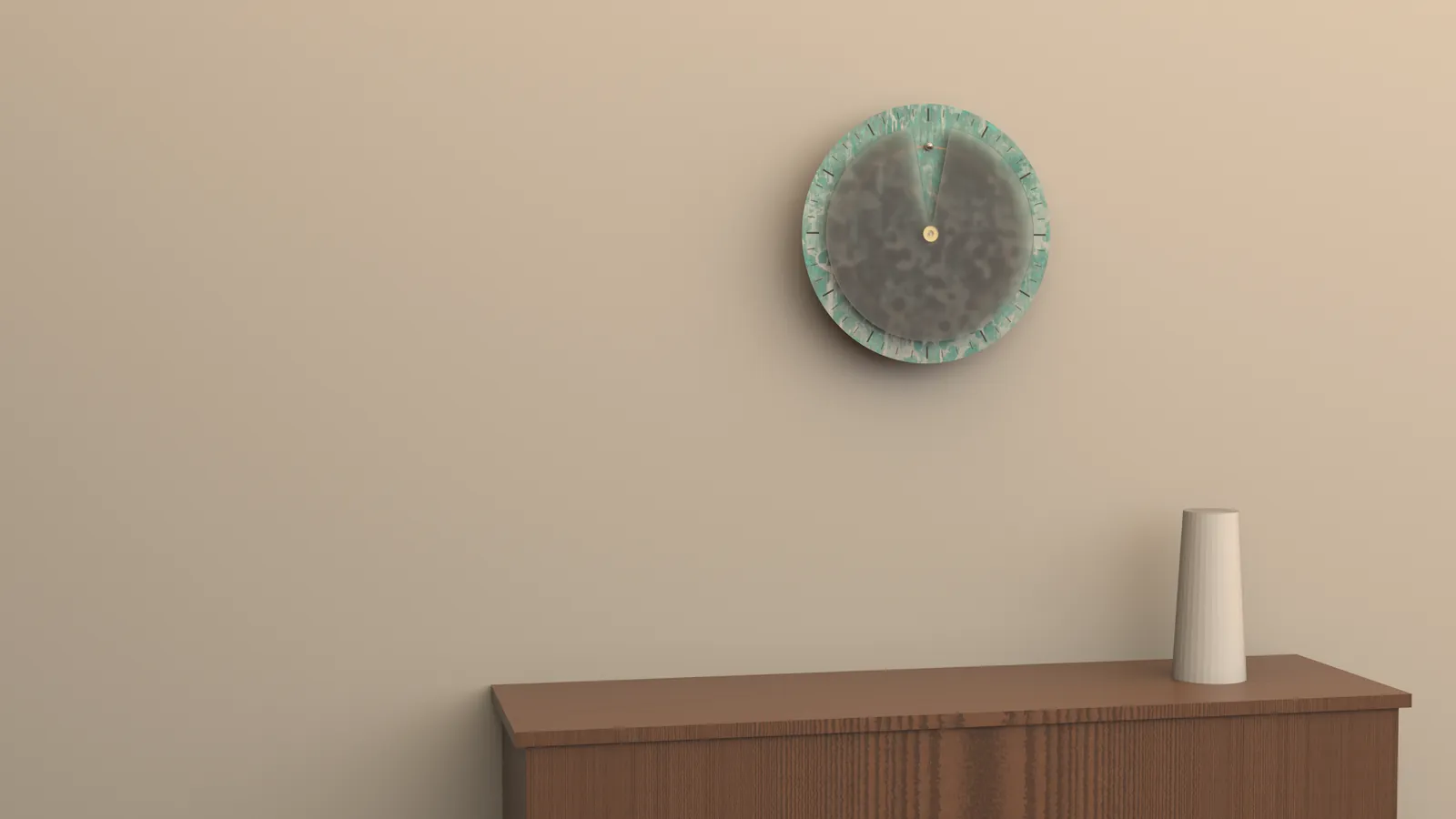
CAD, drawings and the magnet-through-copper bench rig are done and working. The prototype is being built for the November hand-in. The images on this page are KeyShot renders, not photos.
 Render
 Render
 Render
 Render
 Render
 Render
 Render